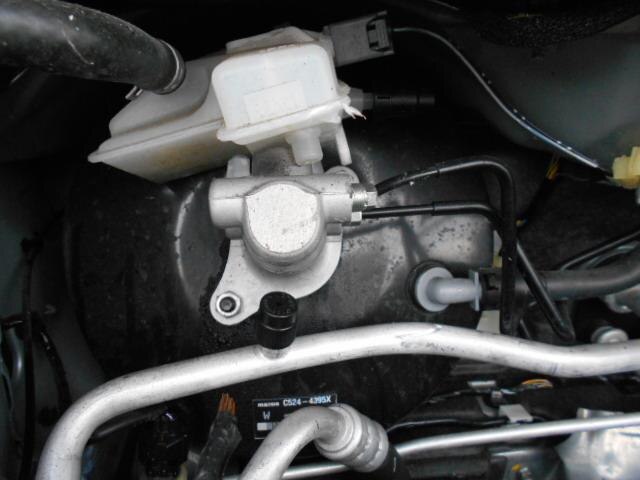
Brake Cylinder Replacement
If your vehicle is experiencing poor braking performance, it's recommended to opt for the wheel cylinder replacement service using Original Equipment Supplier (OES) quality parts. This involves opening the braking system and fitting a new wheel cylinder to address issues affecting braking efficiency. By replacing this critical component, it aims to restore and improve braking performance, ensuring safer and more reliable operation on the road.
The brake master cylinder has a piston that pressurizes fluid in the brake lines to each wheel cylinder as you apply force to the brake pedal. That pressure moves the pistons that are in the wheel cylinders. As the pistons in those wheel cylinders move, they force the brake pads or shoes tightly against the rotors or drums allowing the car to stop quickly. The size of the pistons in the master cylinder and in the wheel cylinders are carefully selected when designing a car. This allows drivers to apply moderate pressure on the brake pedal when stopping, but creates tremendous pressure applied at the wheel cylinders. A car can then stop quickly even at high speeds. Depending on how much force is applied to the brake pedal, the pressure in a car’s brake lines will typically be in the range of 800 PSI to 2,000 PSI.
How it's done
- On vehicles with power brakes, the master cylinder is bolted to the metal housing of the power brake booster. There is usually an electrical plug connecting to a brake fluid level sensor on the master cylinder reservoir and that plug must be disconnected.
- Once all steel brake lines are disconnected from the master cylinder, the master cylinder is unbolted from the brake booster and removed from the vehicle.
- The new master cylinder must be bench-bled to expel air from internal passages that contain the piston. Then the new master cylinder is bolted to the brake booster and the brake lines are reattached. The electrical plug for the fluid level sensor is reconnected.
- Whenever a new master cylinder is installed, brakes lines to wheel positions must be bled to remove air, old fluid and contaminants. If your vehicle is equipped with anti-lock brakes, the mechanic may use a bidirectional scan tool during brake bleeding to actuate the ABS pump, thus ensuring that all air is removed from the complex valving in the ABS system.
- All brake line connections that were removed during the master cylinder replacement are inspected for any leakage and the vehicle is road tested to ensure normal operation of the brakes.
What are the common symptoms indicating you need a Brake Master Cylinder
- The master cylinder is only one component of many in a vehicle’s braking system. During replacement of the master cylinder, all vehicle braking system components should be inspected to ensure maximum braking power is available.
- The amount of friction material remaining on the brake pads and brake shoes should be verified.
- Brake lines and flexible rubber hoses at each wheel position should be inspected for corrosion and deterioration.
- The power brake booster should be evaluated to ensure that power assist is working properly.

To install this Web App in your iPhone/iPad press
 and then Add to Home Screen.
